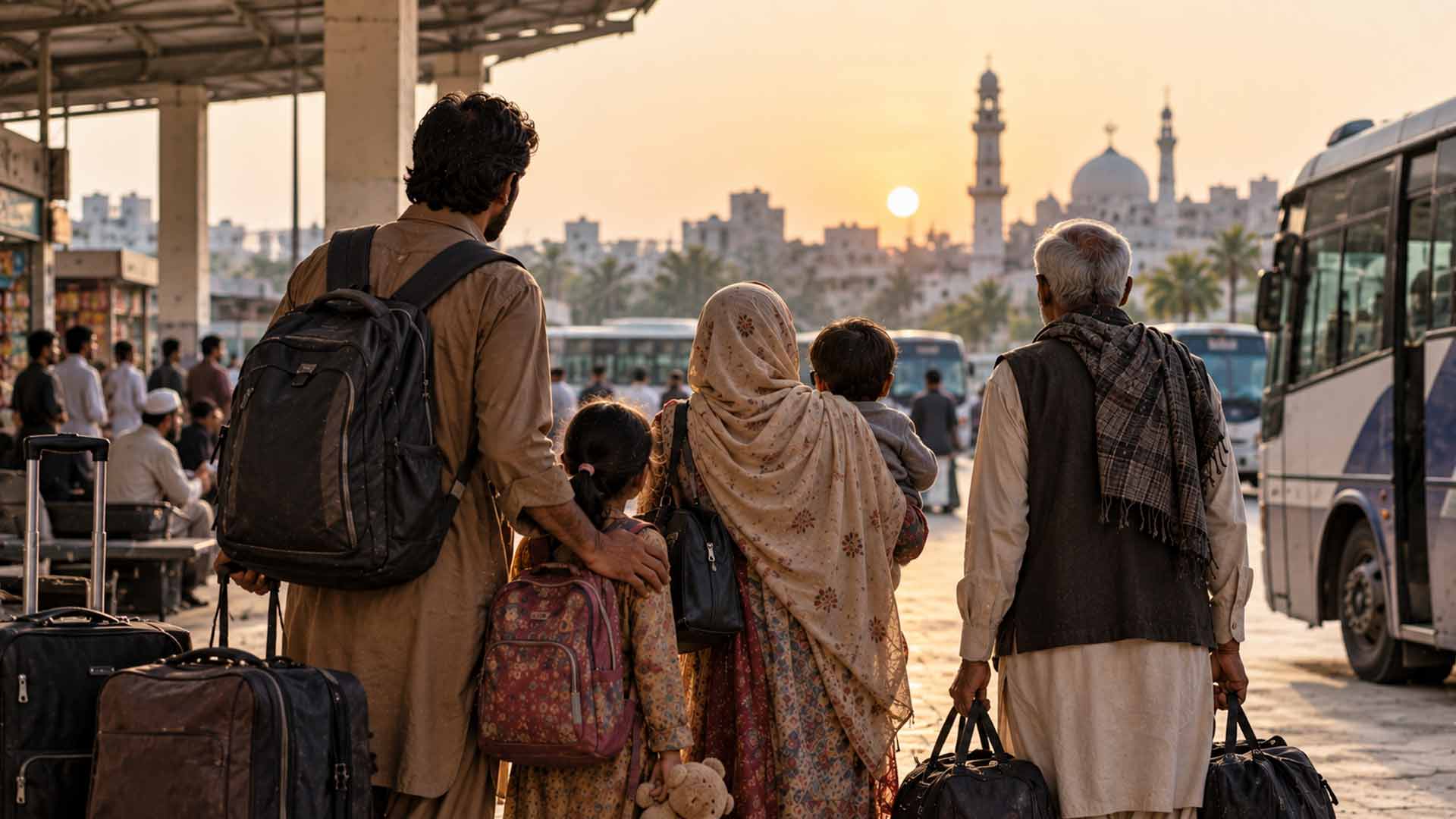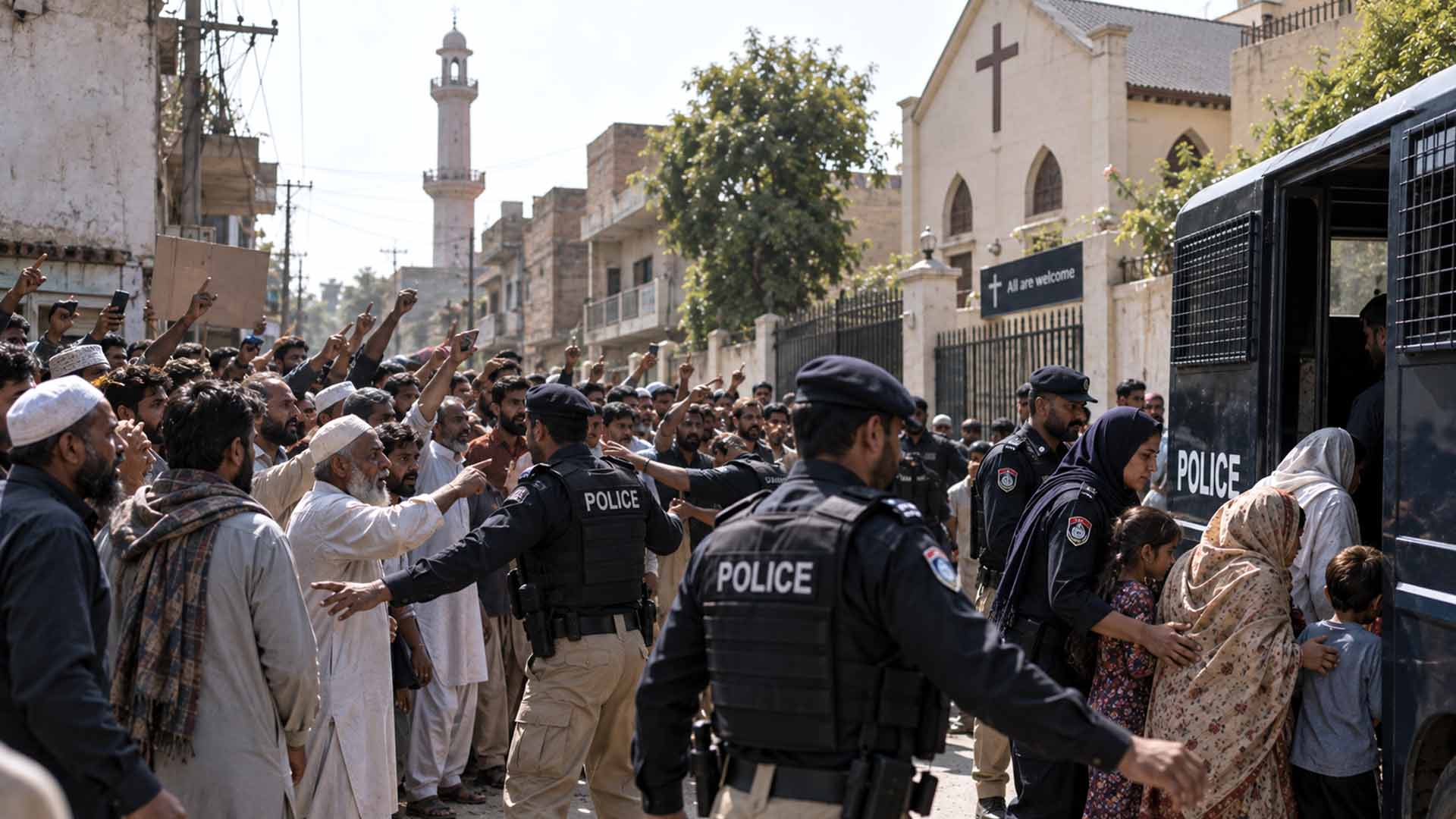







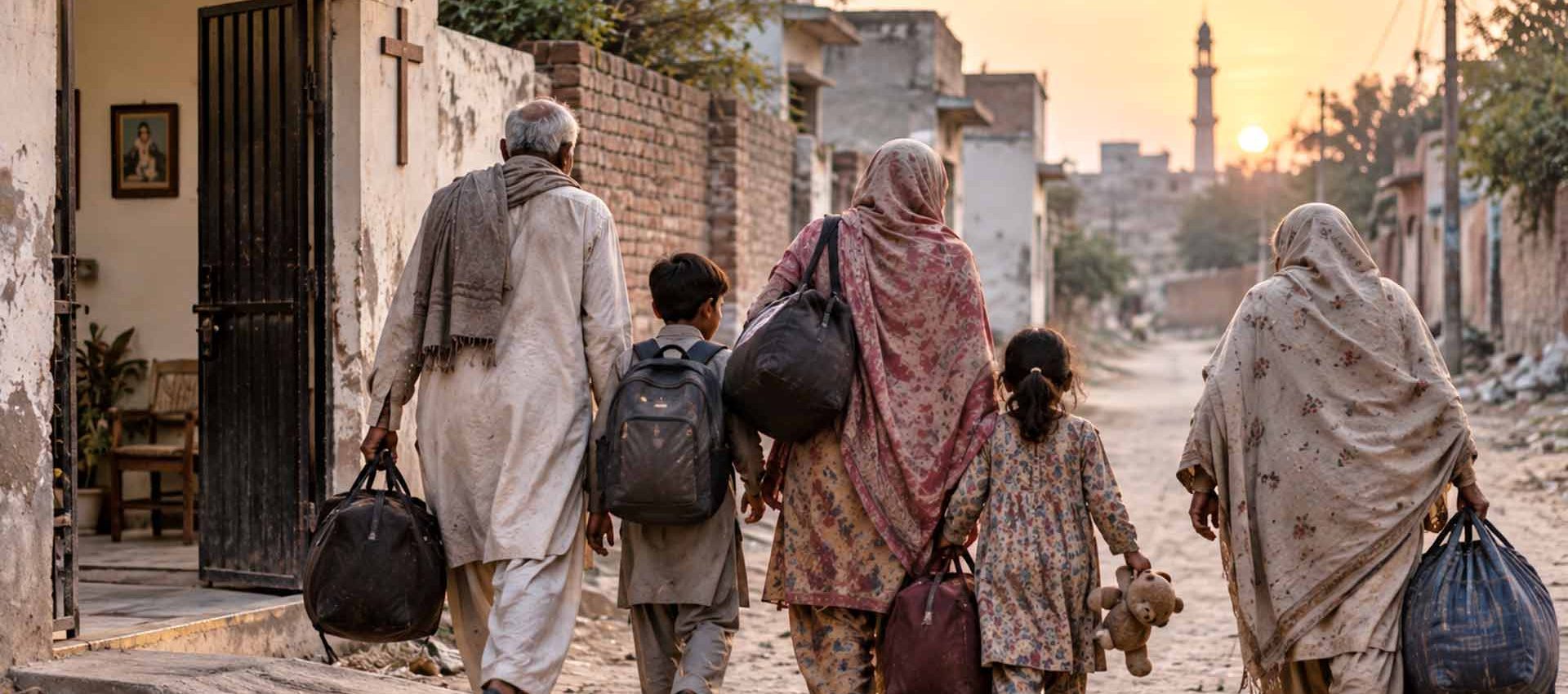
Families of people accused of blasphemy in Pakistan can face threats, displacement, financial hardship and social stigma despite never being accused of any crime themselves.
Blasphemy statistics normally count one person: the accused.
But behind that individual may stand parents, spouses, children and siblings whose lives are also transformed.
They rarely appear in official statistics.
The First Hours
When an allegation becomes public, relatives may face immediate danger.
Neighbors warn them.
Telephone calls arrive.
Crowds begin gathering.
Families may leave with whatever they can carry.
There may be no time to collect:
identity documents,
school certificates,
medication,
family photographs,
or savings.
Losing the Breadwinner
If the accused provided the household’s income, arrest can create immediate financial crisis.
Meanwhile, new expenses appear:
lawyers,
transport to court,
prison visits,
relocation,
and sometimes private security.
Children
Children may lose much more than money.
They can lose school.
Friends.
Routine.
Their home.
And daily contact with a parent.
A father imprisoned for eight years does not merely lose eight years himself.
His children lose eight years with their father.
Social Contamination
A blasphemy accusation can attach itself to relatives.
Employers may become afraid to hire them.
Landlords may refuse accommodation.
Neighbors may avoid contact.
A child can become known simply as:
“the blasphemer’s son.”
None of these people has been charged with anything.
Acquittal Cannot Reverse Time
Suppose the accused is eventually acquitted.
The family may have already spent years displaced.
Children may now be adults.
Parents may have died.
Property may have been lost.
The family’s economic position may never recover.
Conclusion
Every blasphemy case therefore contains two histories.
The official history appears in court records.
The unofficial history lives inside the family.
A complete human-rights archive must preserve both.
Read in Dutch | German | Italian | Portuguese