






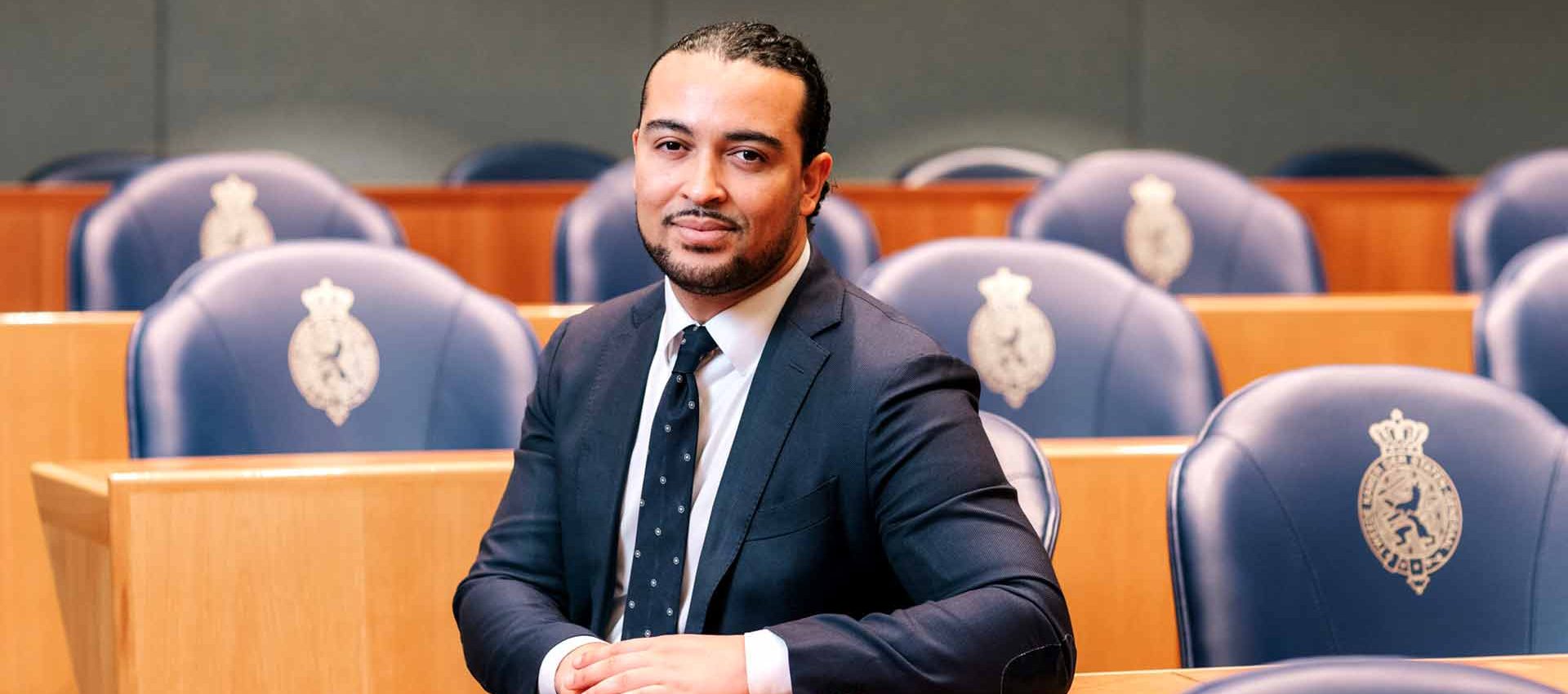
When millions of Christians around the world suffer because of their faith, silence can easily become part of the problem. Dutch Member of Parliament Don Ceder has chosen not to remain silent.
Religious persecution rarely dominates political headlines. The victims often live thousands of kilometres away, their names are unfamiliar, and their suffering can disappear amid wars, economic crises and competing political priorities.
Yet for Don Ceder, a member of the Dutch Parliament for ChristenUnie, the persecution of Christians has become an issue he repeatedly brings before the country’s highest political institution.
His efforts deserve recognition—not simply because he speaks about persecuted Christians, but because he has attempted to turn that concern into parliamentary action.
Bringing Christian Persecution into Parliament
On 1 April 2026, the Dutch House of Representatives held a full parliamentary debate specifically on the persecution of Christians worldwide. Ceder was the first MP to speak.
He reminded Parliament that hundreds of millions of Christians worldwide experience serious persecution or discrimination because of their faith and argued for stronger action through Dutch foreign policy.
The debate itself did not simply appear on the parliamentary calendar. Ceder had repeatedly pushed for parliamentary attention to the issue, including asking the House to ensure that a previously requested debate on Christian persecution actually took place.
There is something admirable about that persistence.
In a political environment where countless urgent issues compete for parliamentary time, continuing to speak for people who have little political influence in the Netherlands requires conviction. Persecuted Christians living thousands of kilometres away cannot vote for a Dutch MP. Many will never know the names of the politicians who defended them.
Speaking for them therefore carries a different significance.
And importantly, the debate did not end with words alone.
Ceder co-sponsored several concrete motions arising from the debate. One called for possible measures against countries where blasphemy or apostasy can carry the death penalty. That motion received overwhelming support in the House of Representatives, passing by 143 votes to 7.
Another motion addressed forced child marriages and forced conversions, calling on the Dutch government to raise these abuses in bilateral contacts and to press for stronger action. It passed by an extraordinary 149 votes to 1.
These results demonstrate something important: Ceder’s efforts have not merely drawn attention to Christian persecution. On significant aspects of religious freedom, they have also helped generate remarkably broad support across the Dutch Parliament.
From Words to a Concrete Plan
Ceder’s advocacy has gone considerably further than speeches.
In January 2026, he presented an extensive initiative paper to Parliament entitled “Tegen christenvervolging, voor geloofsvrijheid” — Against Christian Persecution, for Freedom of Religion.
The paper proposes making freedom of religion a more structural part of Dutch foreign policy. Among other measures, it calls for stronger diplomatic monitoring of religious persecution, better training and religious literacy among diplomats, greater engagement with churches and local civil society, stronger involvement of diaspora communities, and sustained attention to persecuted Christian communities.
Importantly, Ceder does not present religious freedom as a right belonging exclusively to Christians. His initiative explicitly recognizes the persecution of other religious and belief communities as well, including Muslims, Jews, Bahá’ís, Yazidis and atheists.
That makes his advocacy stronger: defending persecuted Christians does not require diminishing the suffering of anyone else. Freedom of religion is a human right for everyone.
A Particularly Strong Voice for Christians in Pakistan
For Pakistani Christians, Ceder’s parliamentary record is especially significant.
In June 2024, Ceder and fellow MP Chris Stoffer introduced a motion concerning Pakistan’s GSP+ trade status with the European Union. Their motion called on the Dutch government to argue at European level that Pakistan’s effective protection of its Christian minority should weigh heavily when decisions are made concerning continuation of that preferential status.
The motion explicitly referred to the misuse of Pakistan’s anti-blasphemy laws.
It received an overwhelming 145 votes in favour in the 150-seat House of Representatives.
That was more than an expression of sympathy. It attempted to connect human-rights protection with a concrete instrument of international policy.
Challenging Pakistan’s Blasphemy Laws
Ceder has subsequently continued raising the situation of Pakistani Christians.
Following reports of the shooting of a Pakistani Christian pastor in 2025, he submitted parliamentary questions asking whether Christians in Pakistan were adequately protected.
He specifically questioned the Dutch government about attacks on religious minorities, the abduction and forced conversion of Christian girls, the misuse of Pakistan’s blasphemy laws against Christians, and whether the Netherlands should press more strongly for action against the misuse—or even abolition—of those laws.
Again, he raised Pakistan’s GSP+ status and asked how preferential access to the European market could be reconciled with structural violations of minority rights.
These are difficult questions, but they are questions that need to be asked.
And Ceder’s concern about blasphemy legislation extends beyond Pakistan. The motion adopted by 143 votes to 7 following the April 2026 debate addressed countries where blasphemy or apostasy can result in the death penalty. It reflected the broader principle that nobody should face execution simply because of an accusation concerning religion or belief.
For Christians living under the threat of such laws, that principle is far from abstract.
Standing Up for Abducted and Forcibly Converted Girls
In March 2026, Ceder again turned Parliament’s attention specifically toward Pakistan after reports concerning a Christian girl and her alleged abductor.
His questions to the Foreign Minister addressed a disturbing pattern reported by human-rights advocates: girls from religious minorities being abducted, forcibly converted and married.
Ceder asked whether Dutch diplomats could become more actively involved, including by attending relevant court proceedings, whether Pakistani authorities should be confronted diplomatically, and what role the Special Envoy for Freedom of Religion and Belief could play.
He also asked the government whether it would meet with the Pakistani Christian community in the Netherlands to discuss Christian persecution in Pakistan and the possible Dutch response.
His concern was subsequently reflected in broader parliamentary action. The motion concerning forced child marriages and forced conversions, co-sponsored by Ceder and adopted by 149 votes to 1, called for these abuses to be raised in bilateral contacts with relevant countries.
For families affected by such cases, these may appear to be parliamentary questions and motions on paper. But political pressure often begins precisely this way: someone must first be willing to put the uncomfortable question on the official record.
Courage Also Means Refusing to Look Away
It is easy for politicians to express sympathy after a tragedy. It is more meaningful when concern becomes persistent.
Don Ceder has repeatedly returned to Christian persecution—in parliamentary debates, written questions, motions and concrete policy proposals.
His work has addressed Pakistan, but also persecuted communities in countries including Nigeria, Syria, China and Egypt. He has raised the plight of converts, forced marriages, attacks on churches and the broader question of whether freedom of religion receives sufficient attention within Dutch foreign policy.
We believe such persistence deserves appreciation.
Political courage does not always consist of taking the most popular position. Sometimes it means continuing to speak about people whose suffering receives too little attention.
For persecuted Christians—whether hiding their faith, fearing an accusation of blasphemy, mourning an attacked church, or desperately searching for an abducted daughter—knowing that someone in a democratic parliament is willing to say their names, raise their cases and demand action matters.
And the overwhelming parliamentary support achieved for some of these initiatives—143 votes to 7, 149 votes to 1, and 145 votes for the Pakistan-related GSP+ motion—shows that one determined voice can also help encourage many others to stand behind a cause.
A Voice That Should Be Heard
Protecting Persecuted Christians is not writing these words to endorse a political party. We recognize that politicians and political parties can and should be judged critically across the full range of their policies.
But when a parliamentarian demonstrates sustained concern for persecuted people, we should also have the courage to say thank you.
Don Ceder has helped ensure that Christian persecution is not completely forgotten within Dutch political debate. His persistence on Pakistan in particular deserves recognition from those of us who know how vulnerable Christian communities there can be.
We hope he will continue asking difficult questions.
We hope he will continue challenging governments when religious freedom is sacrificed for political or economic convenience.
And above all, we hope he will continue giving a voice in the Dutch Parliament to people who often have very little voice of their own.
For that commitment, courage and compassion, we express our sincere appreciation.
Sources: This article is based primarily on official records of the Dutch House of Representatives, including parliamentary questions, motions, debates and Don Ceder’s initiative paper on Christian persecution and freedom of religion.
Image credit: Nienke van Denderen Fotografie / ChristenUnie. Licensed under CC BY-SA 4.0. Image resized for this website.
Read in Dutch | German | Italian | Portuguese