






Blasphemy for Profit: How Accusations in Pakistan Have Been Used in Land Grabs, Business Disputes and Personal Vendettas
Blasphemy accusations in Pakistan may appear, at first sight, to concern religion alone.
Yet behind some allegations lies something considerably more worldly: land, money, business competition, debt or personal revenge.
This dimension of Pakistan’s blasphemy crisis deserves particular attention because it changes the way these cases must be understood. If an accusation carrying potentially catastrophic consequences can be weaponised against an economic rival, neighbour or property owner, then the problem extends beyond freedom of religion.
It becomes a problem of power.
When an Accusation Changes a Property Dispute
A conventional dispute over property requires documents, lawyers and court proceedings.
A blasphemy allegation can alter that balance almost overnight.
Human Rights Watch conducted field research in several districts of Punjab and Islamabad between May 2024 and January 2025 and documented allegations being exploited for economic gain, including blackmail, forced eviction and land seizure.
The organisation found that economically marginalised communities can be especially vulnerable when residents lack formal land titles.
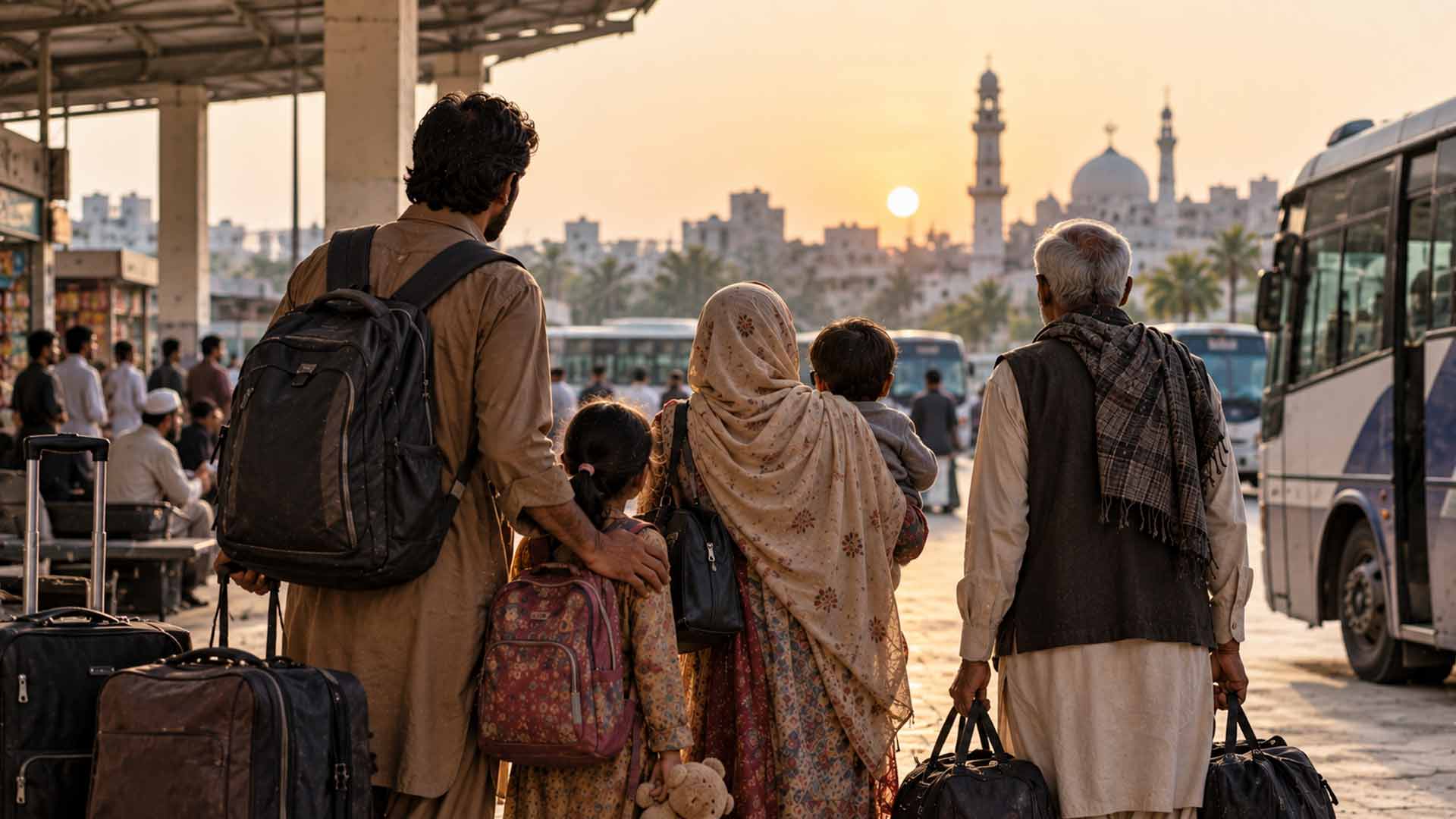
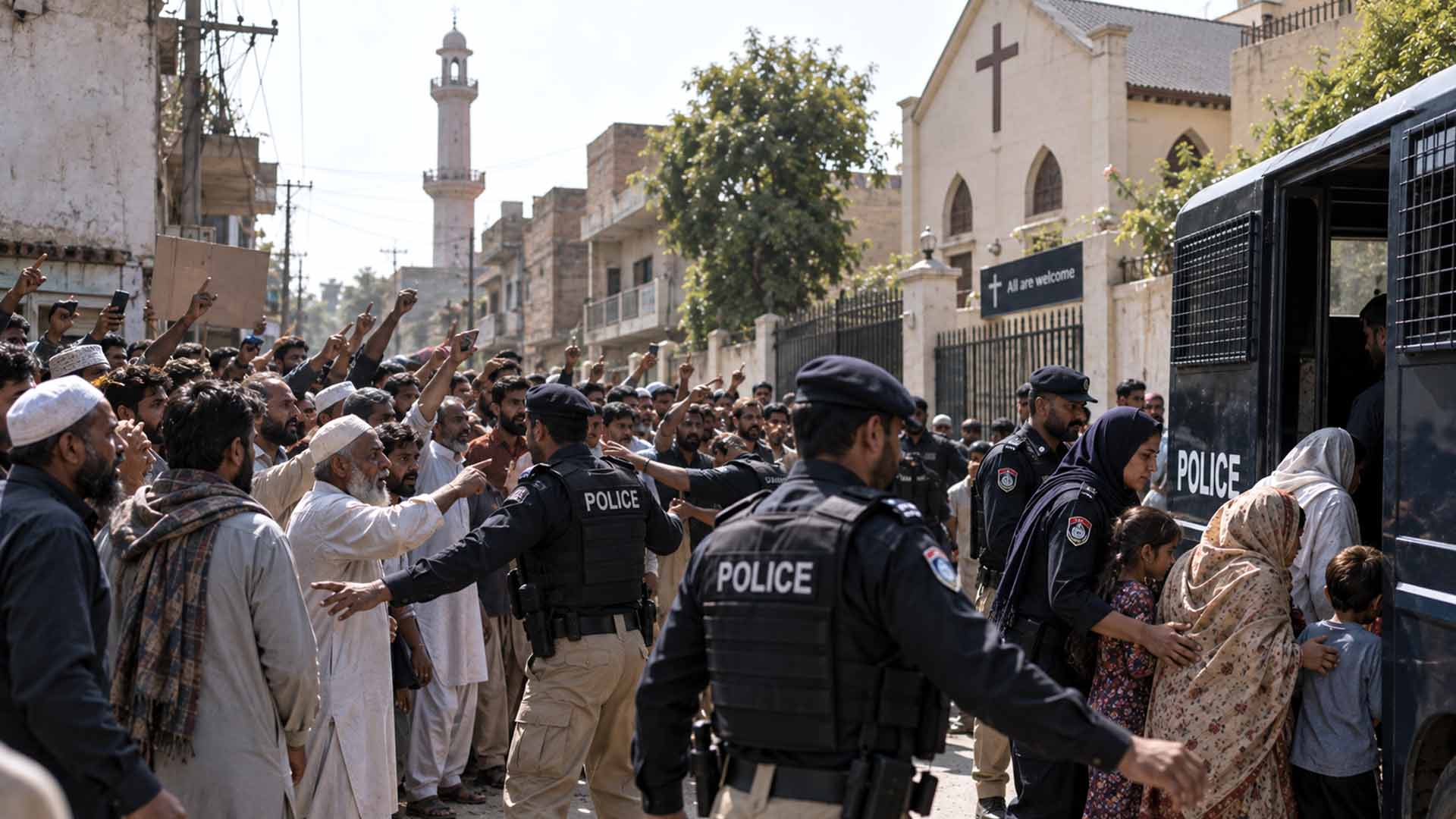
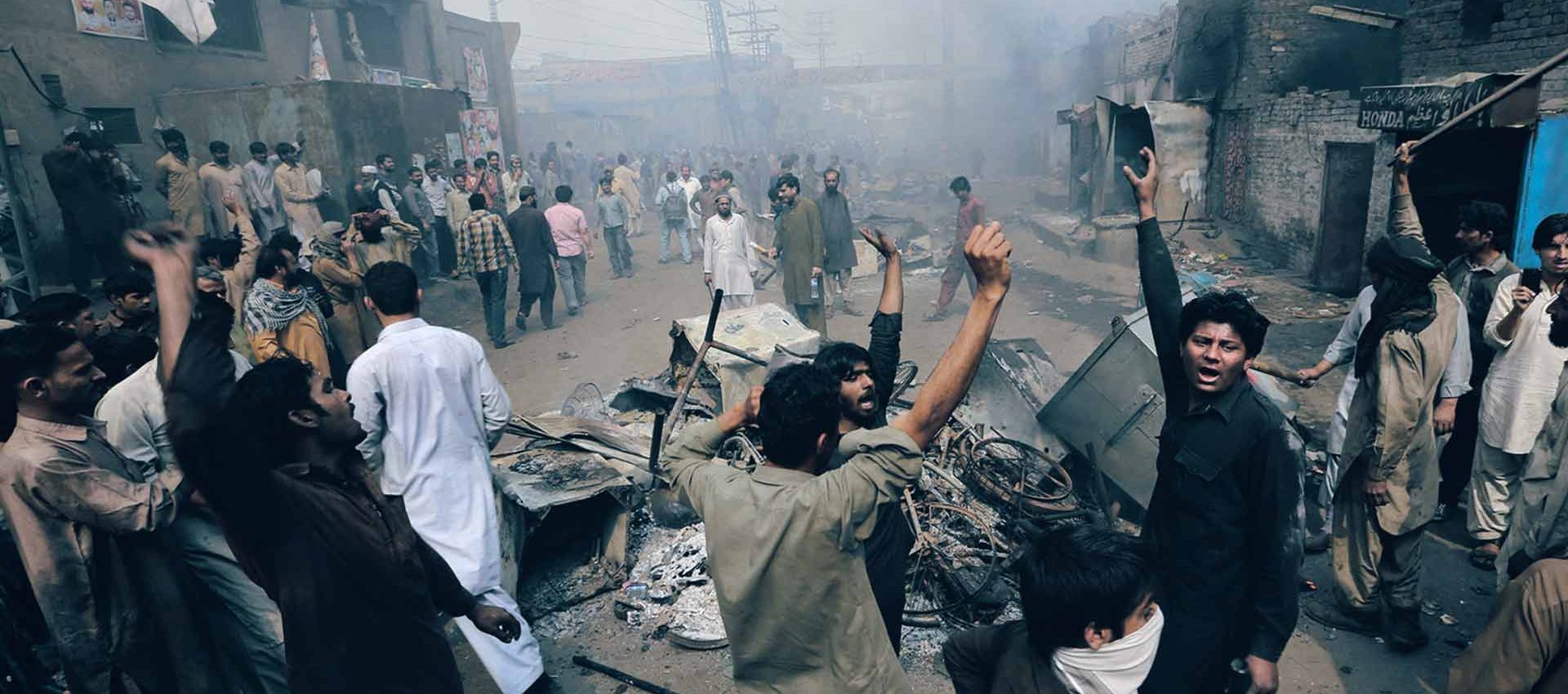
When an accusation triggers threats or mob violence, families may flee.
Their property remains behind.
And abandoned property is considerably easier to occupy than property whose owners are safely living inside it.
Ayub Masih: Religion and a Land Dispute
The case of Christian defendant Ayub Masih illustrates why investigators must examine the background to an accusation.
Masih was arrested in 1996 following allegations that he had made blasphemous remarks.
He denied the accusation.
His defence maintained that the allegation was connected to a dispute involving land.
Masih was eventually sentenced to death.
Years later, in 2002, Pakistan’s Supreme Court acquitted him.
By then, however, years of his life had disappeared inside prison.
The important question is not whether every property-related allegation is fabricated.
It is whether a justice system facing an accusation this serious adequately investigates why the complainant might be making it.
A Powerful Tool for Blackmail
Human Rights Watch’s 2025 investigation went considerably further than individual anecdotal cases.
It documented allegations of blasphemy being used to blackmail individuals, attack commercial rivals and force vulnerable communities from land.
Pakistan’s National Commission for Human Rights has also raised alarm about alleged organised schemes involving hundreds of blasphemy defendants.
This introduces a disturbing economic incentive.
If accusing someone can cause that person to disappear into prison—or force an entire family to flee—an unscrupulous person may discover that religious accusation is more effective than civil litigation.
Minorities Face an Additional Vulnerability
Muslims can and do become victims of malicious blasphemy allegations.
But Christians, Ahmadis, Hindus and other minorities may face additional disadvantages.
Many belong to economically marginalised communities.
Some lack political influence.
Some live on land without strong documentary title.
And once religious hostility develops, an ordinary dispute can become communal.
The accused person may therefore face not merely one adversary but an entire hostile crowd.
Why False Accusers Matter
Public discussion often concentrates entirely on the accused.
But deliberate fabrication must also be investigated.
If authorities prosecute the accused aggressively while rarely holding malicious complainants accountable, the system creates a dangerous imbalance.
The incentive to misuse the accusation remains.
Conclusion
Blasphemy allegations should never become shortcuts for winning land disputes, removing business competitors or settling personal grievances.
Every accusation requires independent investigation.
Investigators should examine not merely what the complainant alleges, but also:
Who benefits if the accused is arrested?
Was there a previous dispute?
Is property involved?
Was money demanded?
Did a business rivalry exist?
Religion may be the language of the accusation.
But sometimes the real story may be about something else entirely.
Read in Dutch | German | Italian | Portuguese