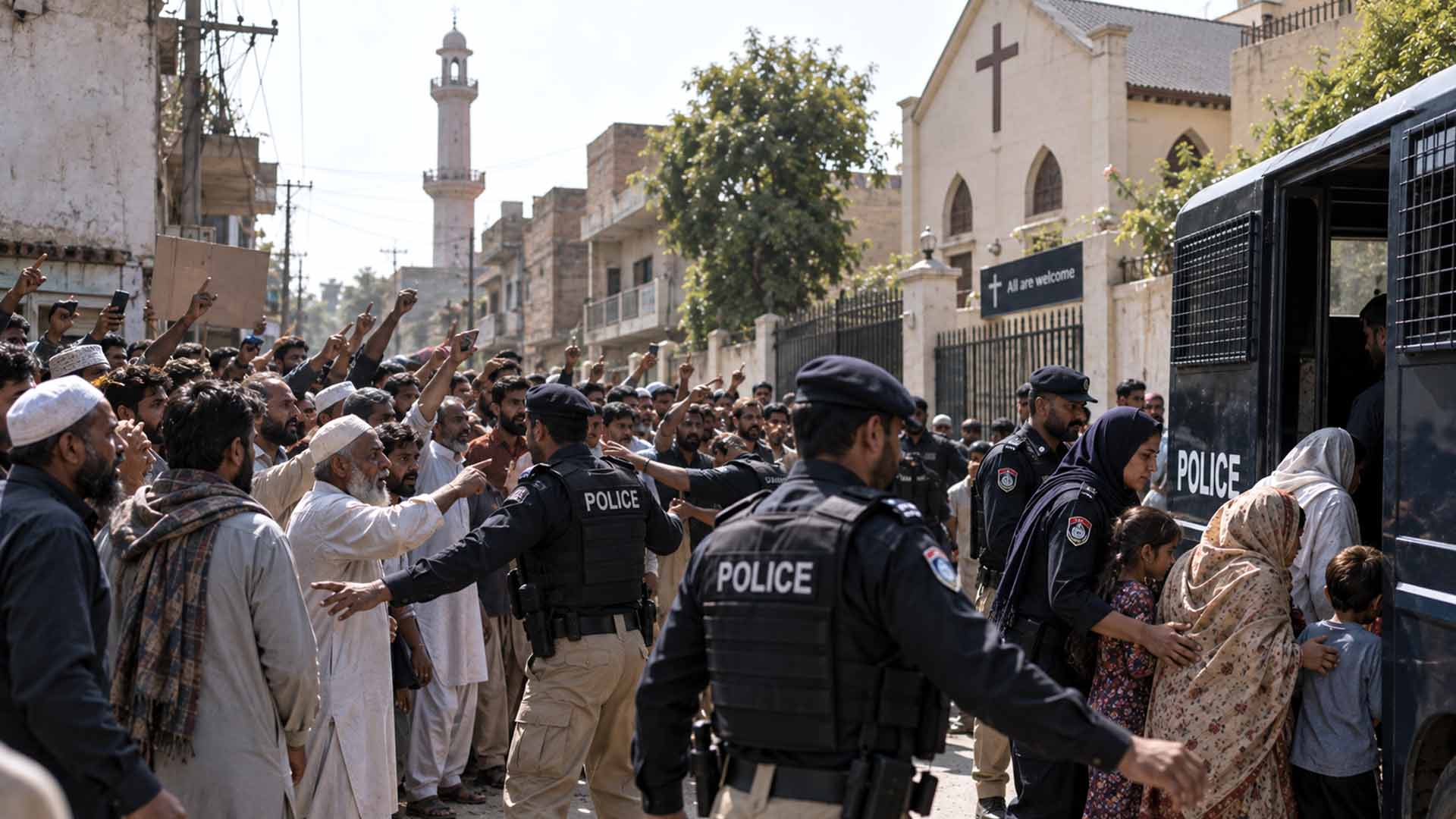







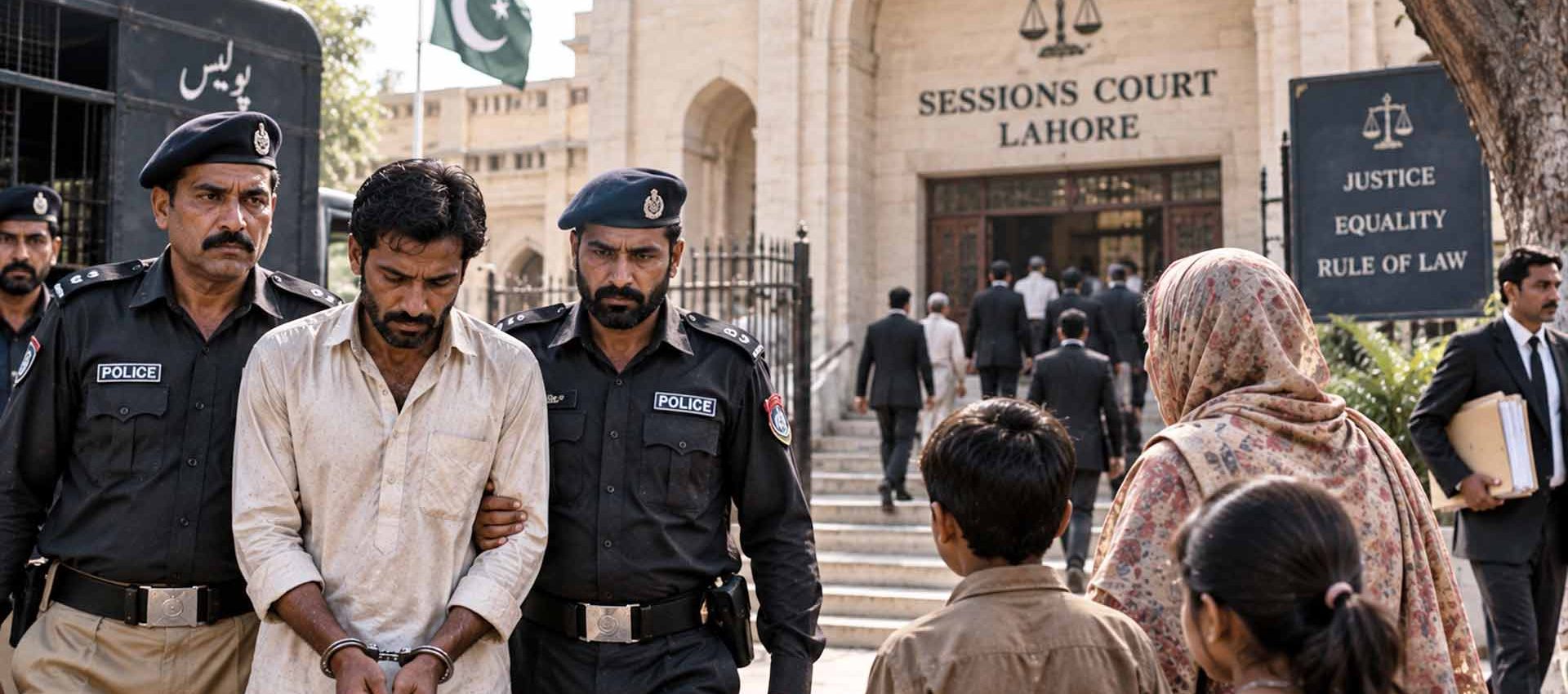
The blasphemy case process in Pakistan can extend from an initial allegation and police FIR to arrest, trial, conviction and years of appeals.
News reports often jump directly from accusation to sentence.
But between those two points lies a complicated criminal process.
Understanding it helps explain why defendants can spend years imprisoned even when eventually acquitted.
Stage 1 — The Allegation
Someone alleges that another person committed an offence involving religion.
This is sometimes the most dangerous stage.
Rumors can spread before police know whether the allegation is credible.
Stage 2 — FIR
Police may register a First Information Report.
The FIR begins the formal criminal process.
It is not a judgment of guilt.
Yet socially, the distinction may disappear quickly.
Stage 3 — Arrest
The accused may be detained.
In ordinary theory, imprisonment before conviction is not punishment.
In practice, prolonged detention can consume years of a person’s life.
Stage 4 — Investigation
Police should gather:
witness testimony,
physical evidence,
digital evidence where applicable,
and information about possible motives for fabrication.
The ICJ has identified incompetent investigation and prosecution among serious problems affecting blasphemy cases.
Stage 5 — Bail
Obtaining bail may be difficult.
Public pressure can complicate proceedings.
Defendants can therefore remain imprisoned while still legally presumed innocent.
Stage 6 — Trial
A trial court hears the prosecution and defence.
But hostile crowds and threats against lawyers or judges can affect the environment in which proceedings occur.
Stage 7 — Conviction or Acquittal
A trial court may acquit.
Or it may convict and impose punishment—including death under Section 295-C.
But that may not be the final judgment.
Stage 8 — High Court Appeal
The conviction can be challenged.
Pakistan’s High Courts have overturned numerous blasphemy convictions.
Stage 9 — Supreme Court
Where legally available and pursued, the case may ultimately reach Pakistan’s Supreme Court.
Asia Bibi’s eventual acquittal demonstrates the importance of appellate scrutiny.
Stage 10 — What Happens After Release?
This stage rarely appears in criminal-procedure textbooks.
But for blasphemy defendants it matters enormously.
Can the person go home?
Are they threatened?
Does the family need protection?
Must they leave Pakistan?
Conclusion
The phrase:
“sentenced to death for blasphemy”
may sound like the end of a case.
History shows that it sometimes is not.
Appeals matter.
Evidence matters.
And until the final judicial process is complete, responsible reporting must never confuse accusation with established fact.
Read in Dutch | German | Italian | Portuguese