






People who have challenged abuses linked to Pakistan’s blasphemy laws—or defended those accused under them—have themselves faced threats and, in some cases, assassination.
Not everyone killed in Pakistan’s blasphemy controversy was accused of blasphemy.
Some were targeted because they defended the accused or called for reform.
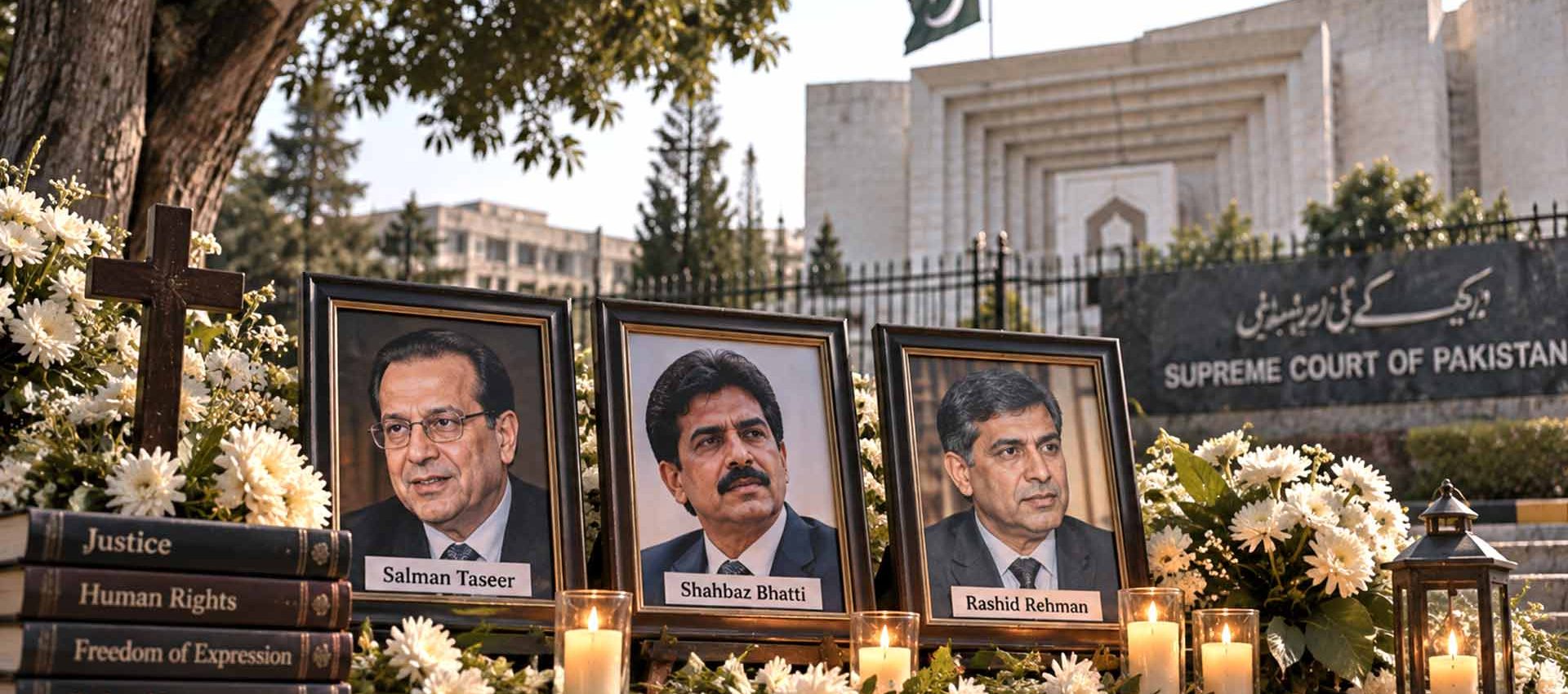
Salman Taseer
Punjab Governor Salman Taseer publicly supported Asia Bibi and criticized the operation of Pakistan’s blasphemy laws.
On 4 January 2011, his own bodyguard, Mumtaz Qadri, assassinated him in Islamabad.
Taseer’s killing shocked Pakistan.
But the reaction that followed was equally revealing.
Qadri became a hero to sections of society.
Shahbaz Bhatti
Federal Minister for Minorities Shahbaz Bhatti was Pakistan’s most prominent Christian politician.
He advocated reform and defended persecuted minorities.
On 2 March 2011, gunmen assassinated him in Islamabad.
Pakistan had lost two prominent voices challenging abuses surrounding the blasphemy laws within only two months.
Rashid Rehman
Human-rights lawyer Rashid Rehman was not a politician.
His “offence” was representing an accused man.
He was murdered in 2014.
Why These Killings Matter
The consequences extend beyond the individuals killed.
Assassinating reformers creates silence.
Politicians become reluctant to discuss legislation.
Lawyers hesitate to accept cases.
Journalists choose words carefully.
Judges understand the danger.
This produces what might be called a chilling effect.
Nobody needs formally to prohibit discussion if people become too frightened to speak.
Conclusion
Pakistan’s blasphemy controversy has therefore claimed several categories of victims:
the accused,
their families,
their lawyers,
and people who publicly challenged abuses.
A legal system cannot be meaningfully debated when participation in the debate itself may cost someone their life.
Read in Dutch | German | Italian | Portuguese