






Blasphemy mob violence in Pakistan does not emerge from nowhere: between an initial allegation and an attack lies a process of rumour, amplification and mobilization. Understanding that process may be crucial to preventing future attacks.
Stage One: The Trigger
An allegation occurs.
Perhaps someone claims religious material was damaged.
Perhaps a social-media post appears.
Perhaps an argument between neighbors is reinterpreted as religious insult.
At this stage, very few people may know what actually happened.
Stage Two: Amplification
The allegation spreads.
Historically, mosque announcements and word of mouth could mobilize communities.
Today, WhatsApp, Facebook and other platforms can accelerate the process.
A complicated allegation becomes a simple message:
Someone has committed blasphemy.
Nuance disappears.
Stage Three: Identity
The accused person’s religion may become central.
A Christian accused of an offence can rapidly become:
“Christians have insulted Islam.”
The accusation has now shifted from individual behavior to communal identity.
Stage Four: Gathering
People begin assembling.
At this point, intervention matters enormously.
Police leadership.
Local religious leaders.
Community elders.
Political figures.
Any of them may either calm or intensify the situation.
Stage Five: Dehumanization
Once the accused is described not as a neighbor but simply as “the blasphemer,” ordinary moral restraints weaken.
The crowd may begin to see violence as religiously justified.
Stage Six: Attack
History provides devastating examples:
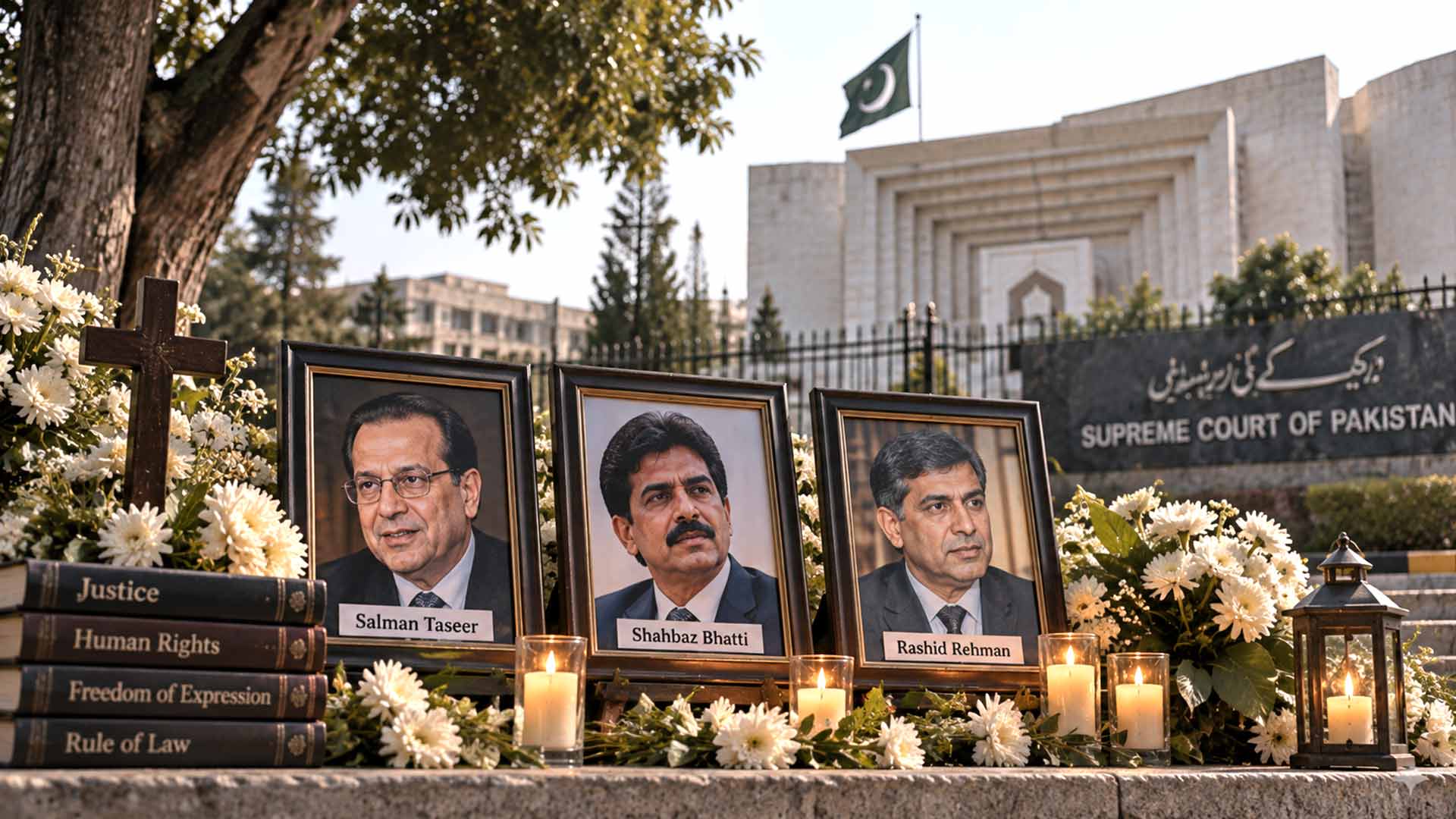
Joseph Colony.
Jaranwala.
Mashal Khan.
Priyantha Kumara.
Shama and Shahzad Masih.
Waris.
Different places.
Different victims.
But recurring patterns.
A Different Outcome in Karachi, 2026
A July 2026 incident provides an important counterexample.
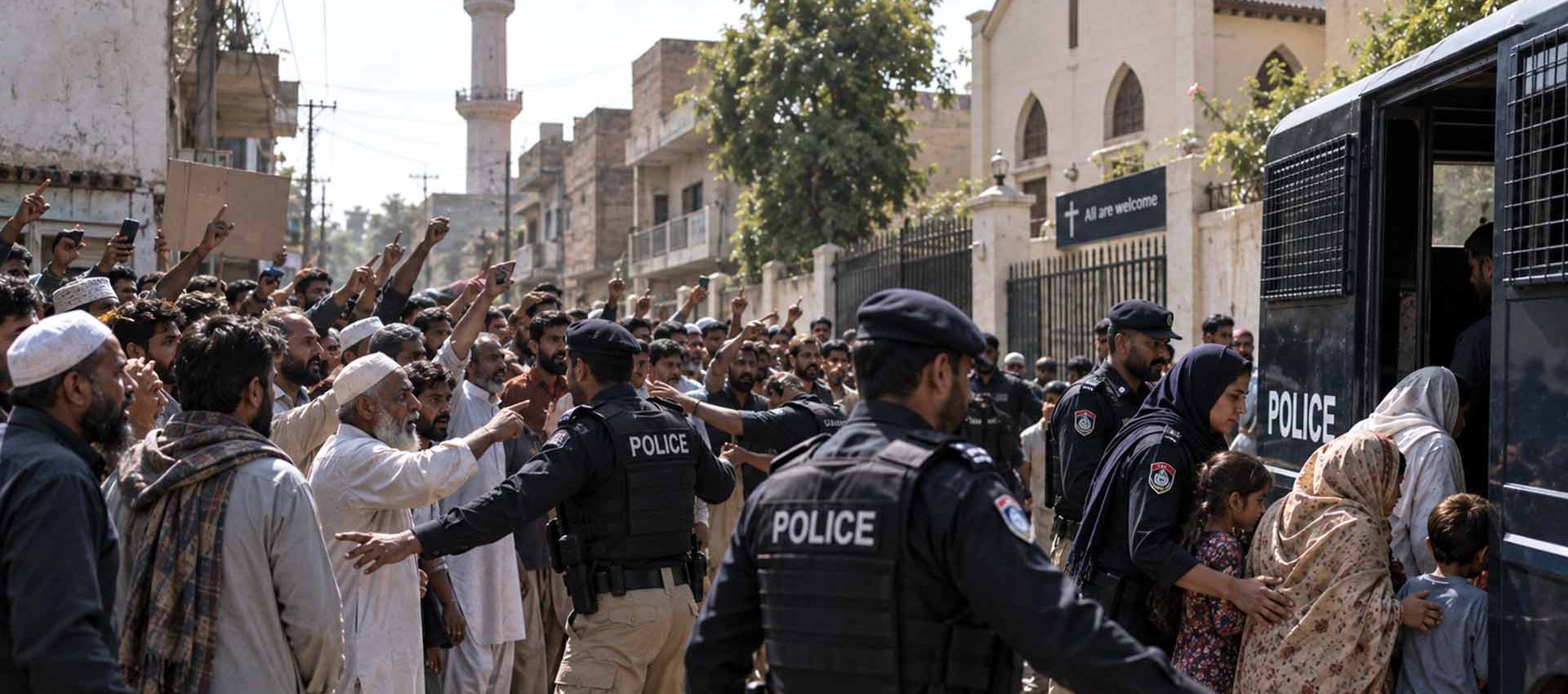
A blasphemy allegation against a Christian family caused hundreds of people to gather.
Police intervened rapidly.
Officers confronted the crowd and removed four women and a child to safety.
A preliminary inquiry subsequently found the allegation false.
Reuters’ account suggests that timely intervention—and the absence of organized extremist instigators—helped prevent another tragedy.
This matters enormously.
It shows that mob violence is not inevitable.
Conclusion
Preventing blasphemy-related lynching requires intervention before the final stage.
Once hundreds of enraged people are attacking someone, control becomes extraordinarily difficult.
The critical window lies earlier:
when the rumour begins,
when the first messages circulate,
when crowds start gathering,
and when authorities must decide whether to act.
The 2026 Karachi incident provides a hopeful lesson:
A rumour does not have to become a funeral.
Read in Dutch | German | Italian | Portuguese